Weekly Market Update 4/9/2026
|
|

Here is your weekly market update from the Garden City Co-op Grain Origination Team.
Trivia
-
How many sides are on a cube?
-
In what year did the Berlin Wall fall?
Answers at the bottom.
Market News
SUMMIT MAX 2026: Planting milo or corn, farmers can benefit from seasonal trends in corn futures with GCC’s Summit Max contract. This contract values your enrolled bushels based on the average daily highs of December corn futures from May to July, for a fee of 10 cents. After the final average price is set, remember that the basis must be set by October 1st. However, you may wish to do so at any time. SummitMax enrollment will be ending on Friday, May 1st. Please reach out to our dedicated GCC Grain Team for support in maximizing your bushels this year!
WASDE & MARKET UPDATE: May corn futures were down 2 ¾-cents today to close at a settlement price of $4.4450. December corn futures settled down 8-cents today, closing at $4.74. An overnight rally in crude oil, driven by concerns over the long-term sustainability of the ceasefire agreement between the US and Iran, helped pull corn futures higher overnight. Attention then shifted back to fundamentals with today’s supply and demand report, which left 2025/26 US corn ending stocks unchanged. That outcome came as a surprise to some analysts, who were expecting to see an increase in domestic ending stocks. The report also showed no changes to South American production estimates, despite the expectations for higher output in both Brazil and Argentina. While global ending stocks did increase overall, the lack of domestics revisions may have helped limit downside pressure in the corn market.
May soybean futures were up 3 ¼-cents today, closing at a settlement price of $11.6525. November soybean futures were up ½-cent to a settlement price of $11.5250. Ongoing strength in soybean oil futures has helped support the broader soybean complex, even after steep losses in crude oil during Wednesday’s daytime trading session. In today’s USDA supply and demand report, soybean crush was increased by 35 million bushels, reflecting strong domestic demand. That increase was fully offset by a 35 million bushel reduction in export projections, leaving domestic ending stocks unchanged. On the global side, analysts anticipated higher Argentine production and lower Brazilian output, but the USDA left both estimates unchanged. As a result of minor adjustments elsewhere, global ending stocks decreased slightly, offering some modest underlying support to the market.
May wheat futures were down 4 ¾-cents today, closing at a settlement price of $5.9050. Wheat futures traded higher overnight Wednesday, supported by a rally in crude oil that added some war-premium back into the market. At the same time, forecasts calling for rain across the Plains through the weekend have tempered concerns, as improved moisture could help stabilize crop ratings and support yield potential. Attention turned to the latest WASDE report today, which showed domestic wheat ending stocks rising to 938 million bushels – the highest level since the 2019/20 marketing year. On a global scale, world ending stocks increased by 6.16 MMT from March. That rise was driven largely by higher inventories in India, Ukraine, the European Union, Australia, and Bangladesh, reinforcing the broader supply-heavy backdrop for wheat.
INTEREST RATE MARKET UPDATE: Jobs rebounded in March, adding 178,000 jobs, and blowing away the estimated 65,000 jobs. Unemployment dropped to 4.3% while labor force participation fell to 61.9%, which is the lowest since 1977, not counting COVID. Though unemployment numbers look better, it fell because people quit looking for work, therefore not considered “unemployed.” The last time trends moved this direction in a significant way was in 2008 during the post-financial crisis peak. This is leading to a conflicting view of the labor market: people with jobs feel good, but those that are looking for jobs feel similar to that of a recession. Within the labor market, hourly earnings increased $0.09 to $37.38 on average. Fed expectations are pretty dull, as nothing points to any movement until the Spring of 2028. March numbers seem to be fairly decent, but background trends are worth paying attention to as we move forward.
CROP PROGRESS REPORT: Out Monday, covering the week through April 5 – marks the first of these reports for the 2026 season. Monday’s report showed initial corn planting progress, winter wheat conditions, and more. Winter wheat quality ratings showed a notable decline since the prior report on November 24, 2025, which reported 48% of the crop in good-to-excellent condition. However, the USDA dropped nationally to 35%. Kansas was 38% G/E vs 51% LY and below the average of 40%. Corn plantings were 3% complete as of Sunday, slightly surpassing analysts' expectations. Texas is leading the way with 59% completed, followed by Tennessee at 18% and Missouri at 8%. However, nine of the top 18 corn-producing states have not shown any measurable progress so far. Nationwide, the pace of planting in 2026 is slightly ahead of both 2025 and the five-year average.

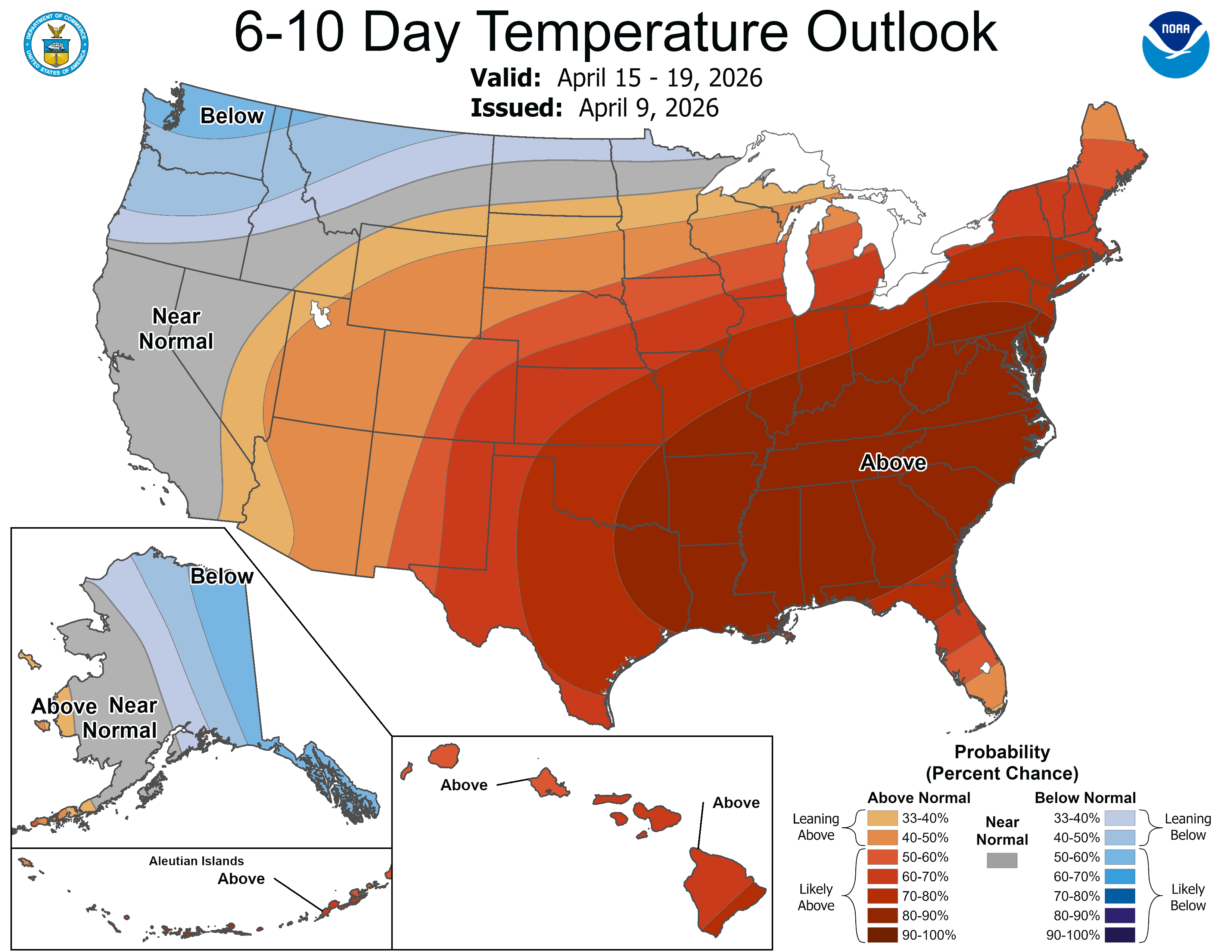
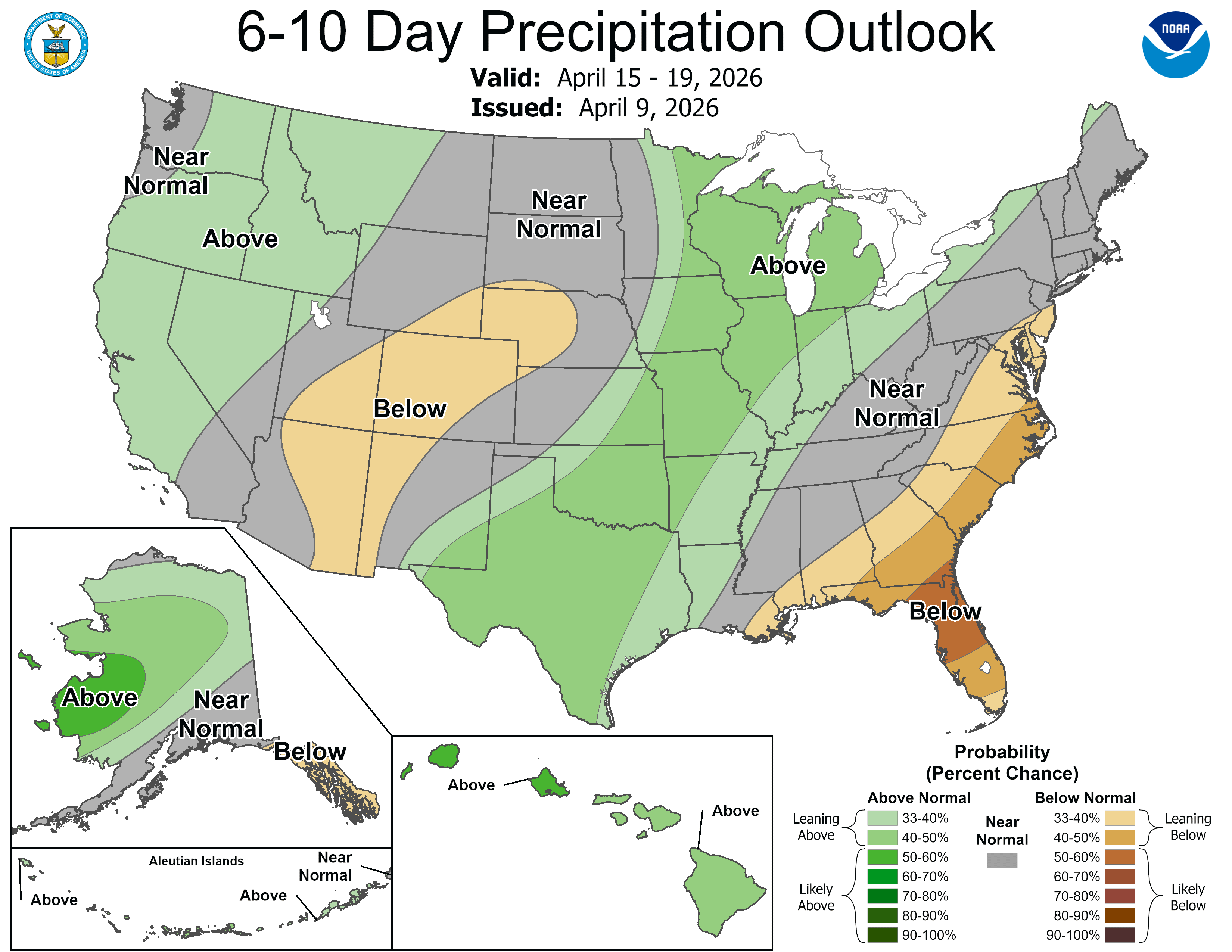
WEATHER: Could we finally get some rain?! Chances are there today through Saturday, but it will be a “believe it when you see it” forecast. Highs today are near 84°F and breezy with a 20% chance of showers after 4pm, before increasing to 70% this evening, including thunderstorms, with amounts less than a tenth of an inch. Tomorrow is much cooler with a high of 48°F and a 50% chance of showers during the day, increasing to 60% Friday night, looking at a tenth to quarter inch total. Rain chances continue Saturday at 60% with warmer weather, near 76°F and windy. Precipitation is estimated less than a tenth of an inch again, but could be higher if thunderstorms develop. Sun and wind returns Sunday with a high of 84°F and keeping that trend through next week, including slight rain chances Tuesday and Wednesday.
|
|
|
Trivia Answers
-
12
- 1989