Weekly Market Update 2/26/2026
|
|

Here is your weekly market update from the Garden City Co-op Grain Origination Team.
Trivia
-
Who was the first author to use a “typemachine” or typewriter in writing a manuscript?
-
Which Canadian hockey player is considered to be the greatest of all time?
Answers at the bottom.
Market News
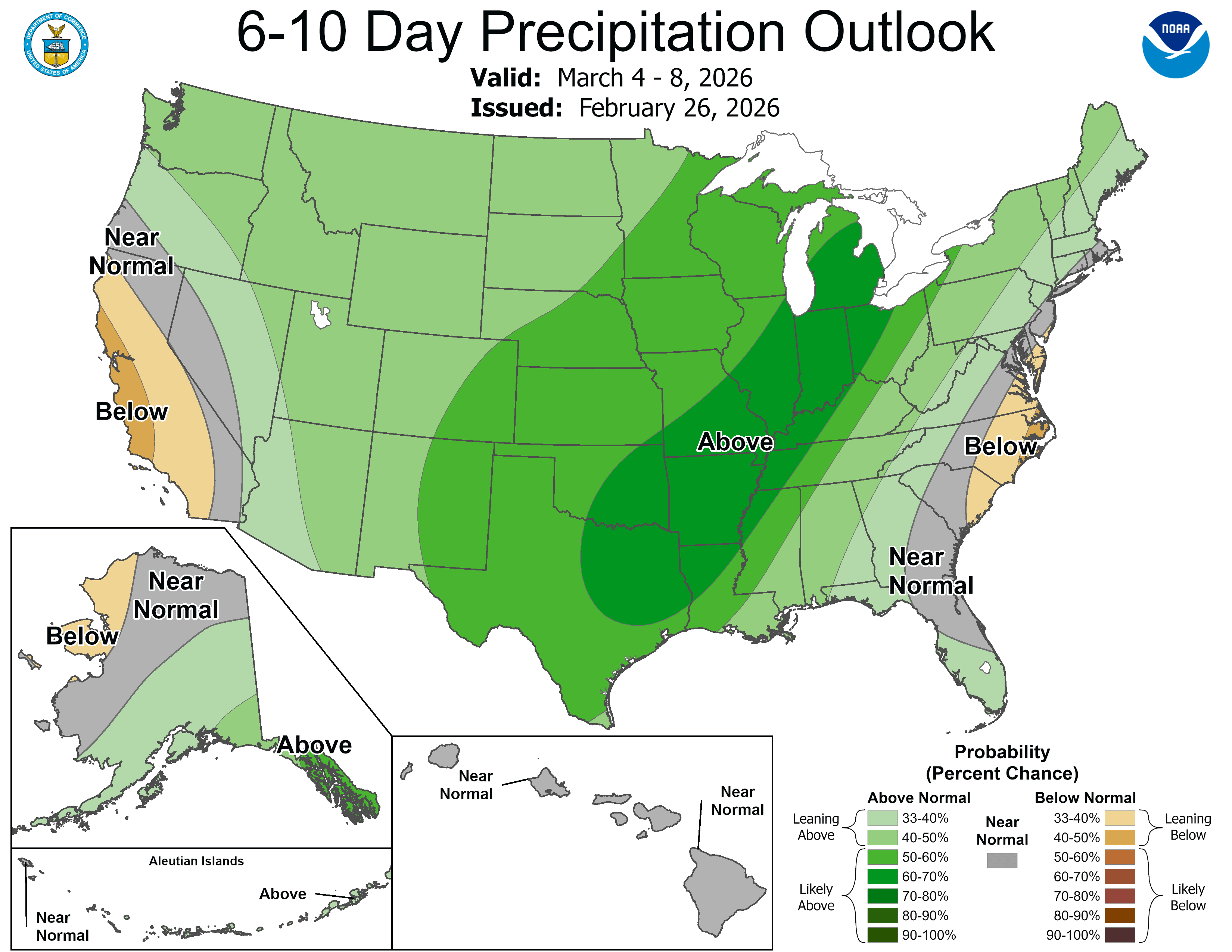
MARKET UPDATE: Corn prices received a boost after the EPA submitted the Renewable Volume Obligation proposal to the Office of Management and Budget. While corn is less impacted than other feedstocks in the biofuel sector, there was noticeable late-session buying. Ethanol production showed stable output, with a slight 5,000-barrel-per-day decline, and marketing-year-to-date averages are 1.3% higher than last year. Stock levels rose to 25,646 thousand barrels but remained 7% lower than last year. US ethanol exports, especially to Vietnam, show significant growth potential, as Vietnam plans to launch E10 fuel on June 1st, but it can meet 40% of its demand domestically. Exports to Vietnam have fluctuated vastly in the past five years, while total US exports generally hover around 180 million gallons. The latest export figures from the Census Bureau, originally due on March 5th, have been postponed to the 12th due to funding issues. Wheat struggles to hold onto its short-covering driven rally as export offers dissuade some business and encourage imports from the lowest-priced exporters. As reported earlier, the US is either the 3rd or 4th most competitive wheat offer on the market, with a premium sufficient to allow Western Hemisphere supplies to come in as imports. Trade still expects last week’s activity to be average to above average for net sales, with an analyst range of 0.25 to 0.5 mmt. Seasonally, this is the point in the US marketing year when export interest weakens significantly. The US weather outlook holds to its wetter shift, which takes some of the drought concern away, and the Trade will be watching to see if the systems play out as predicted. Other wheat exporters are not a major threat to their supplies. Milo, despite higher production, prices have been trending downward for a few years now. However, China has continued to buy significant amounts of U.S. sorghum, reportedly 1.6 to 2.5 million metric tons recently, due to corn quality issues. While the industry focuses on year-round E15 fuel expansion and new high-biomass hybrids, the milo market remains uncertain.
ENERGY: The U.S. and Iran are set to discuss nuclear policy today, with recent indications suggesting that Iran is demonstrating flexibility and a positive attitude towards U.S. demands. Oil prices seem to have peaked after reaching a high on Monday, as they have declined for three consecutive sessions this week and dropped further this morning. However, following the U.S.-Iran discussions, energy markets showed a positive shift. And then Iran stated that it would never relinquish their enriched uranium, which is a requirement from the U.S. side. There is still potential for negotiations to resume later today. Additionally, the Department of Energy reported a significant increase in U.S. crude oil stocks, with a build of nearly 16 million barrels for the week ending last Friday. This figure is much higher than the anticipated minor gain, resulting in crude inventories exceeding last year's levels.
SUPREME COURT TARIFF RULINGS: Last week, the Supreme Court ruled that President Trump’s use of the International Emergency Economic Powers Act was unconstitutional in a 6-3 vote. Taxing power, including tariffs, is nearly 100% a Congress-only act. The President does have the authority to implement bans and licensing requirements. In basic terms, they decided we are not in a state of an international economic emergency for President Trump to be authorized to impose tariffs. There is still question on if, when, and how refunds will take place, but that number may be nearly $175 billion. The White House is currently working on other legal ways to still essentially impose the tariffs.
What does this mean for us? The US depends significantly on global markets. As we know, those trade relationships have been rocky to say the least. President Trump exempted many fertilizer components from tariffs but could potentially change again. These rulings have given us more uncertainty, leading to potentially more volatile markets
EXPORTS: At or below estimates was the theme of the day in today’s export sales report. Old crop corn came in at 27 million bushels, well below the lowest trade estimate of 35.4 million and posting the third worst week of sales for the entire marketing year. Top customers this week were Mexico and Japan. A tiny dab of new crop corn – 500,000 bu – also traded to Mexico. Corn exports remain relatively strong despite a lower weekly number, with corn 3% ahead of the pace needed to hit current USDA estimates. Milo posted sales of 400,000 bushels. Soybean sales came in right at the low end of estimates at 15.0 million bushels, the second worst week of the marketing year. Wheat was below expectations at 8.9 million bushels of old crop, while also posting 3.9 million bushels of new crop, with destinations including Mexico, Nigeria, Ecuador and Taiwan. Monday’s export inspections report was a mixed bag, with corn posting a VERY strong 78.9 million bushels inspected for export, wheat also posting a strong 19.7 million bushels, and soybeans posting a mediocre 24.6 million.
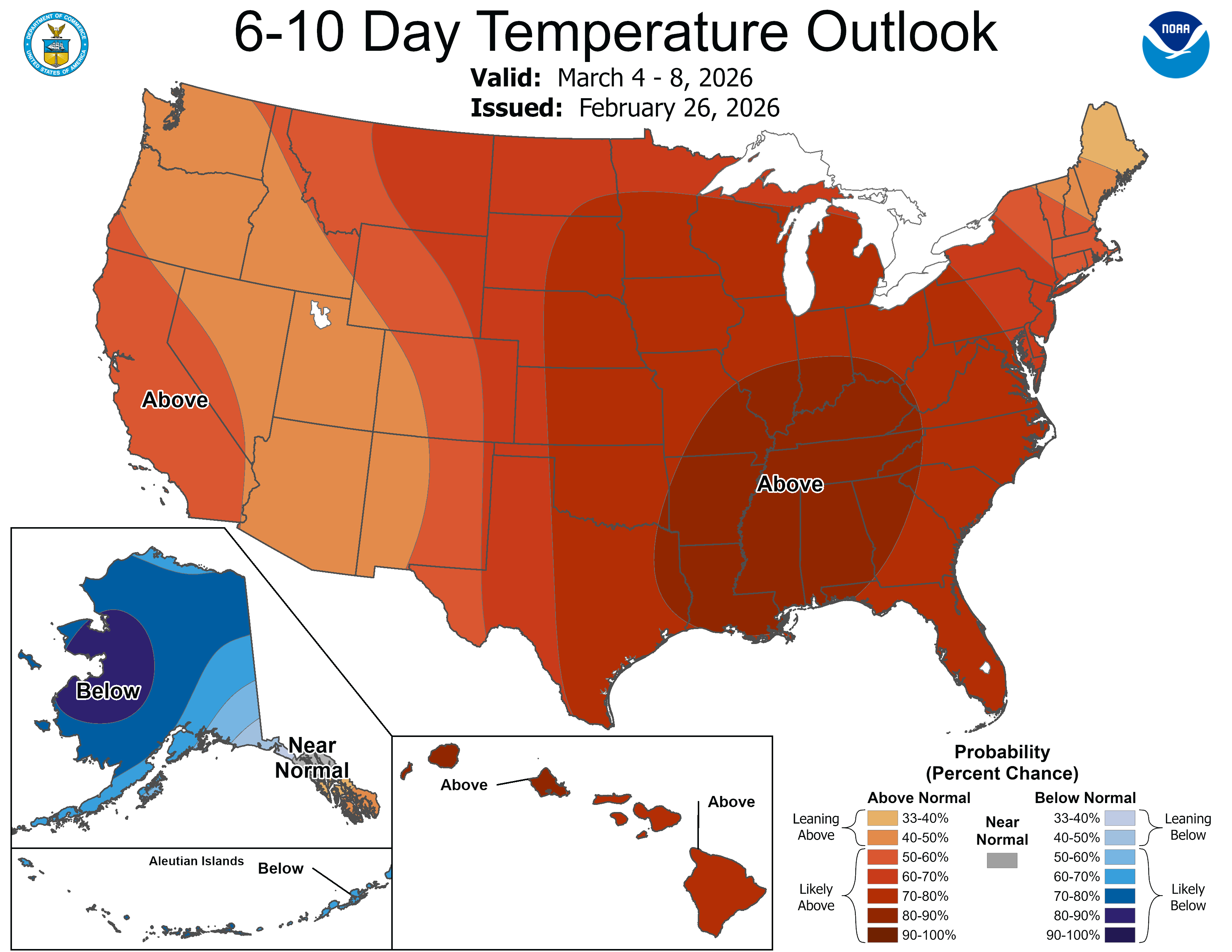
WEATHER: Skies today are partly cloudy with a high near 68°F with north/northwest winds 9 to 15 mph. Friday and Saturday look to be sunny and warm with highs near 73°F. Saturday night lows are near 30°F before cooling off significantly on Sunday with a high of 46°F. There is a 20% chance of snow on Sunday night with lows around 20°. Monday will be cooler, near 45°F before warming up near 60°F Tuesday and Wednesday. Early next week brings decent chances for showers, with the best Tuesday night, near 70%.
|
|
|
Trivia Answers
-
Mark Twain
- Wayne Gretzky