Weekly Market Update 9/11/2026
|
|

Here is your weekly market update from the Garden City Co-op Grain Origination Team.
Trivia
-
Pure water has a pH level of around?
-
In what year was the first-ever Wimbledon Championship held?
Answers at the bottom.
Market News
Your GCC grain team is getting ready to launch enrollment for our Alpine Pro wheat contract. This contract prices July 2027 (NC) Wheat futures through a combination of committee pricing and a proprietary rules-based Algorithm. Unique to this contract is our provision that allows a farmer to be released from the contract in case of verified crop failure, such as drought, freeze, or hail. This managed contract is a great tool to diversify your marketing portfolio. Sign-ups will run through the end of September. The Pricing window will run through Oct. 1, 2026 – June 1, 2027.SEPT WASDE: Corn: old-crop (2025/26) corn exports rise 25 million bushels; thus OC stocks are down 23 mbu; new-crop (2026/27) yields are cut by 2.2 bpa, with production down 213 mbu. '26/27 feed use is reduced by 150 mbu, but that still leaves overall ending stocks down 86 mbu to just 1.567 bln bu. World old-crop stocks are up 2.5 million tonnes, with production up a million (BRZ), while new-crop stocks are down 2.5 MMT thanks to that loss in the U.S. crop.
Beans: old-crop balance table is unchanged this month; new-crop yield and acreage tick up slightly for a 16 mbu production gain. That is more than wiped out by a 25 mbu export increase, leaving overall carryout down 10 mbu this month to 310 mbu (still above expectations). The world soybean balance table has changed very little.
Wheat: no changes in the U.S. S&D. World new-crop carryout up 3 MMT with production up nearly the same amount, thanks to a +3 MMT for Australia, but also smaller gains in CAN, ARG, and UKR. Grains popped after the USDA release, but only corn reversed the day's downward trend. OC feed use remains, but USDA clearly has yields sliding.
CROP PROGRESS: The USDA reported that 2% of the U.S. winter wheat is planted, lagging behind last year's 4% and the five-year average of 5%. The slow start is attributed to heat and low soil moisture in the Southern Plains. The market's ability to purchase more winter wheat acres amid rising prices will be noteworthy. Meanwhile, the U.S. Spring wheat harvest has reached 86% completion, with delays mainly in Montana due to wet weather, while other states are ahead of their average harvest rates. U.S. corn ratings dropped 1% week-on-week to 56% good or excellent, matching analyst estimates. This is 12% lower than last year and 3% below the five-year average. The national corn harvest is 5% complete, ahead of last year's 4% and the five-year average of 3%. Recent heatwaves have accelerated corn maturity, although rain delays are expected. U.S. soybean ratings remained stable at 58% good or excellent, exceeding predictions of a 1% decline. While this is 6% lower than last year, it's only 1% below the five-year average. The soybean harvest is expected to begin next week, with 26% of the crop already dropping leaves, which is 6% ahead of last year and the average pace.
INTEREST RATE MARKET UPDATE: The August CPI report likely keeps the Fed on track for another rate hike because while headline inflation met expectations, core inflation rose 0.3%, suggesting underlying price pressures accelerated rather than continued cooling. Energy prices, particularly gasoline, drove much of the increase, but inflation remains broad-based, with roughly 80% of the CPI basket still running above the Fed's 2% target. Although some components such as medical care and insurance softened and the overall report was not an inflationary shock, it was not weak enough to justify a pause. Market reactions reinforced this view, as short-term rates barely moved and long-term rates actually fell, indicating investors largely expected a hike and did not see a significantly worse inflation outlook. For borrowers and businesses, the key takeaway is that while the next rate hike appears mostly priced in, there is still little evidence that interest rates have definitively peaked, making prudent risk management and selective hedging important.
EXPORTS: Corn inspections came in higher than expected at 65.5 million bushels, helping us start the new marketing year stronger than the 3-year average last year, but that wasn’t enough to feed the bulls at the start of the week. Wheat inspections lagged the recent trend at 12.6 million bushels, led by railcars of HRW, HRS, & SRW to Mexico, with WW to Indonesia and the Philippines taking WW and HRS from the PNW. The bean complex finished with 15.5 million bushels, landing in the middle of estimates. Italy took the larger share, followed by Bangladesh and Algeria, close behind. Weekly corn and soybean export sales exceeded expectations for the week ending September 3rd, with corn at 75.9 million bushels and soybeans at 96.9 million bushels. Mexico was the primary destination for corn, and China for soybeans, with additional flash sales of 264k metric tons of corn to Mexico reported. Wheat export sales dropped to a marketing year low of 7.1 million bushels, below estimates, while milo (sorghum) sales were disappointing at 0.5 million bushels, marking the lowest commitments for this time in 15 years.

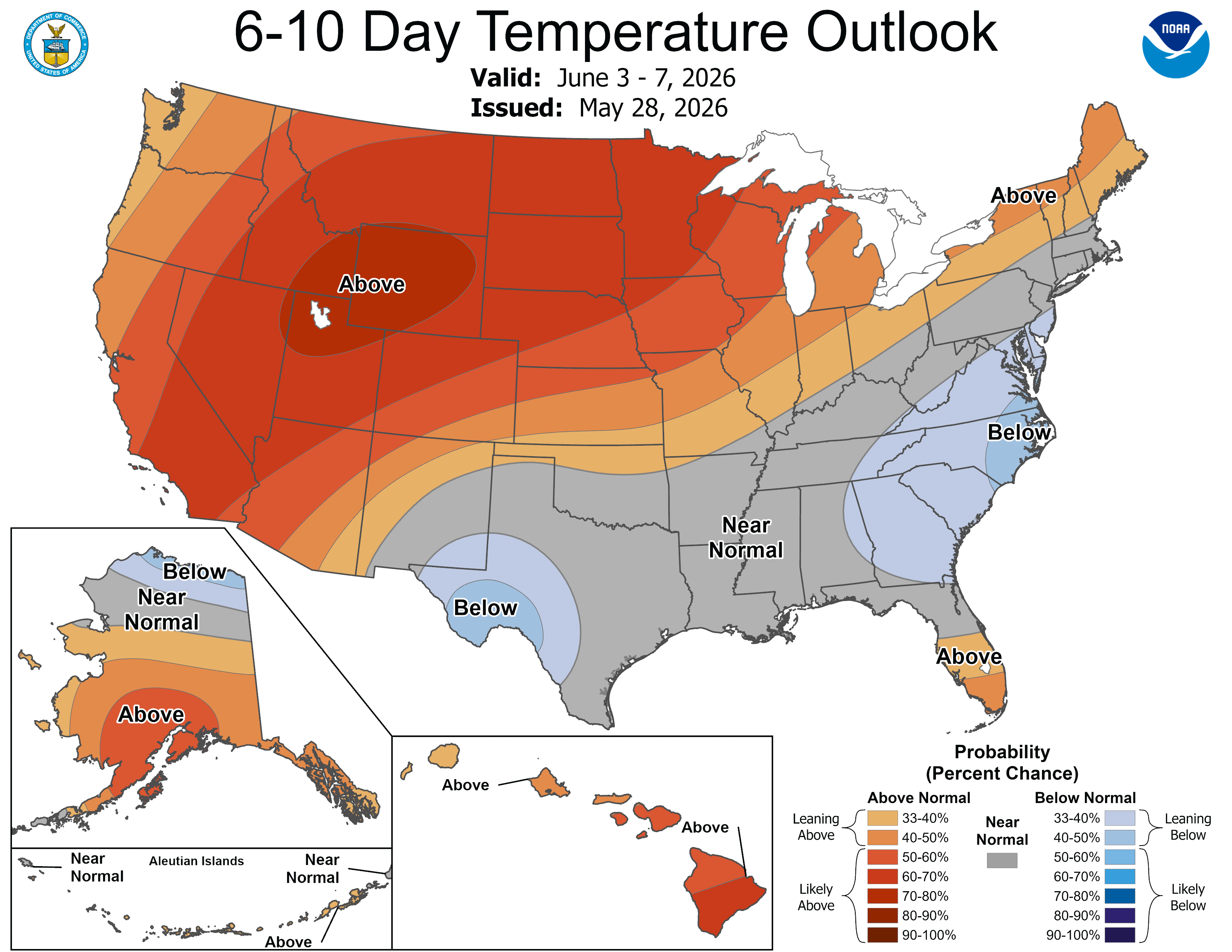
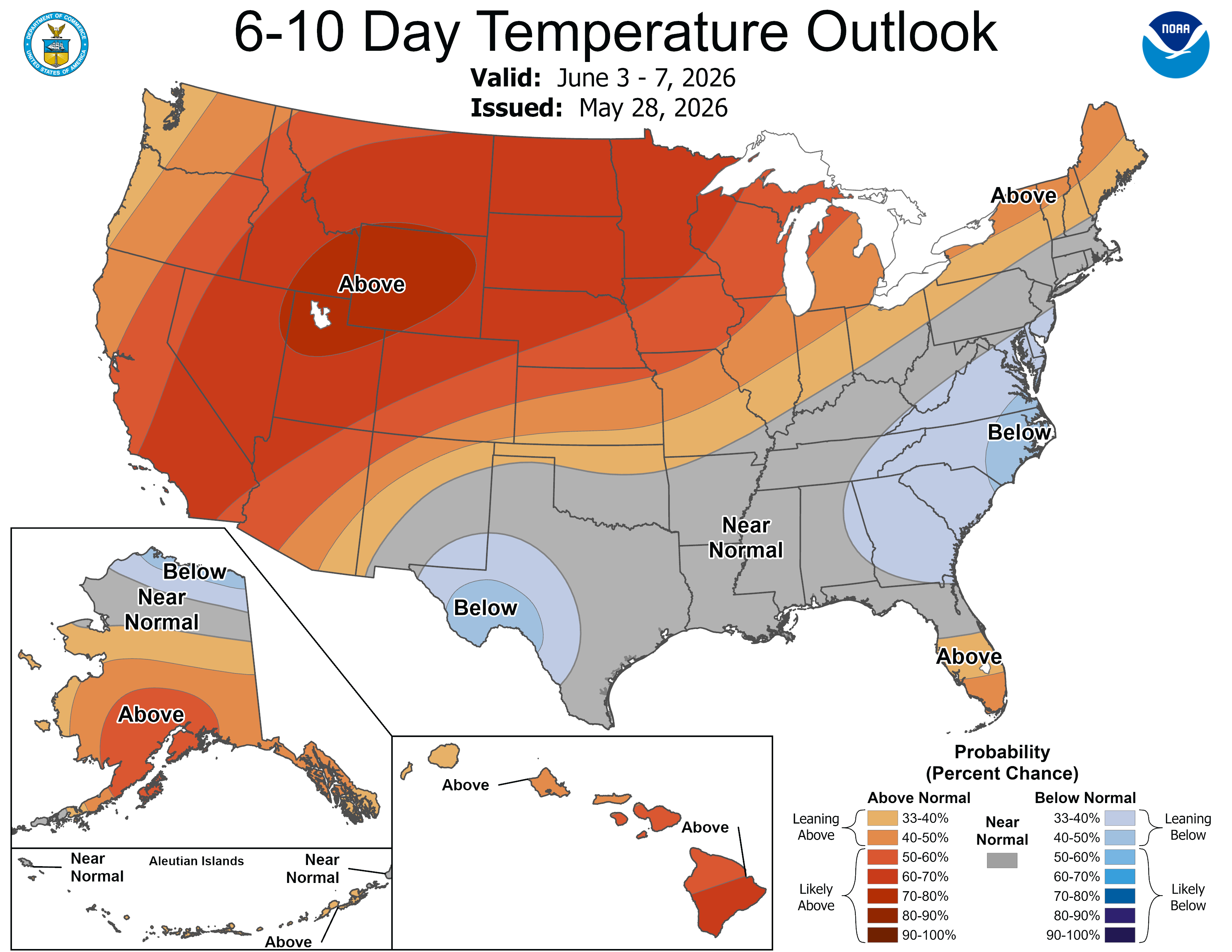
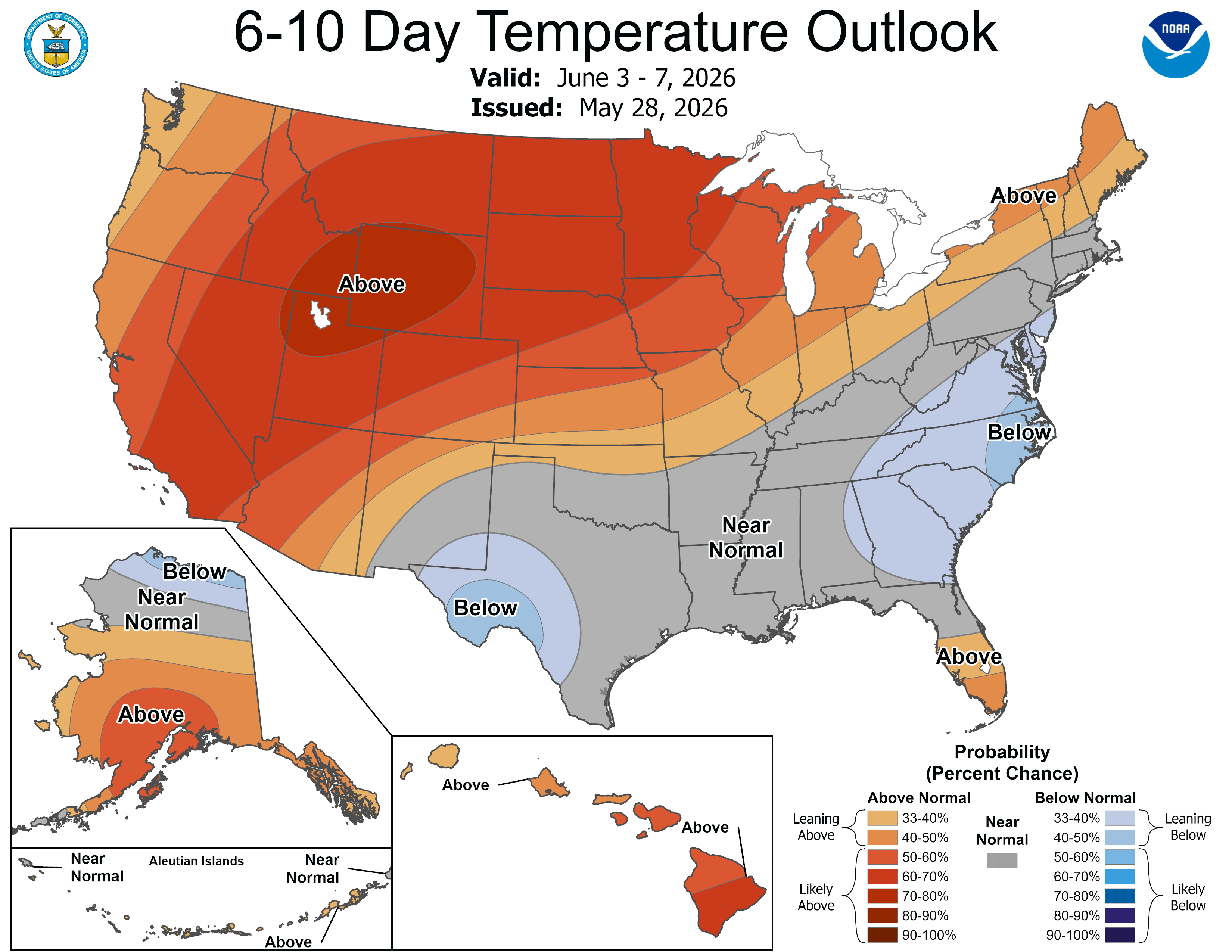
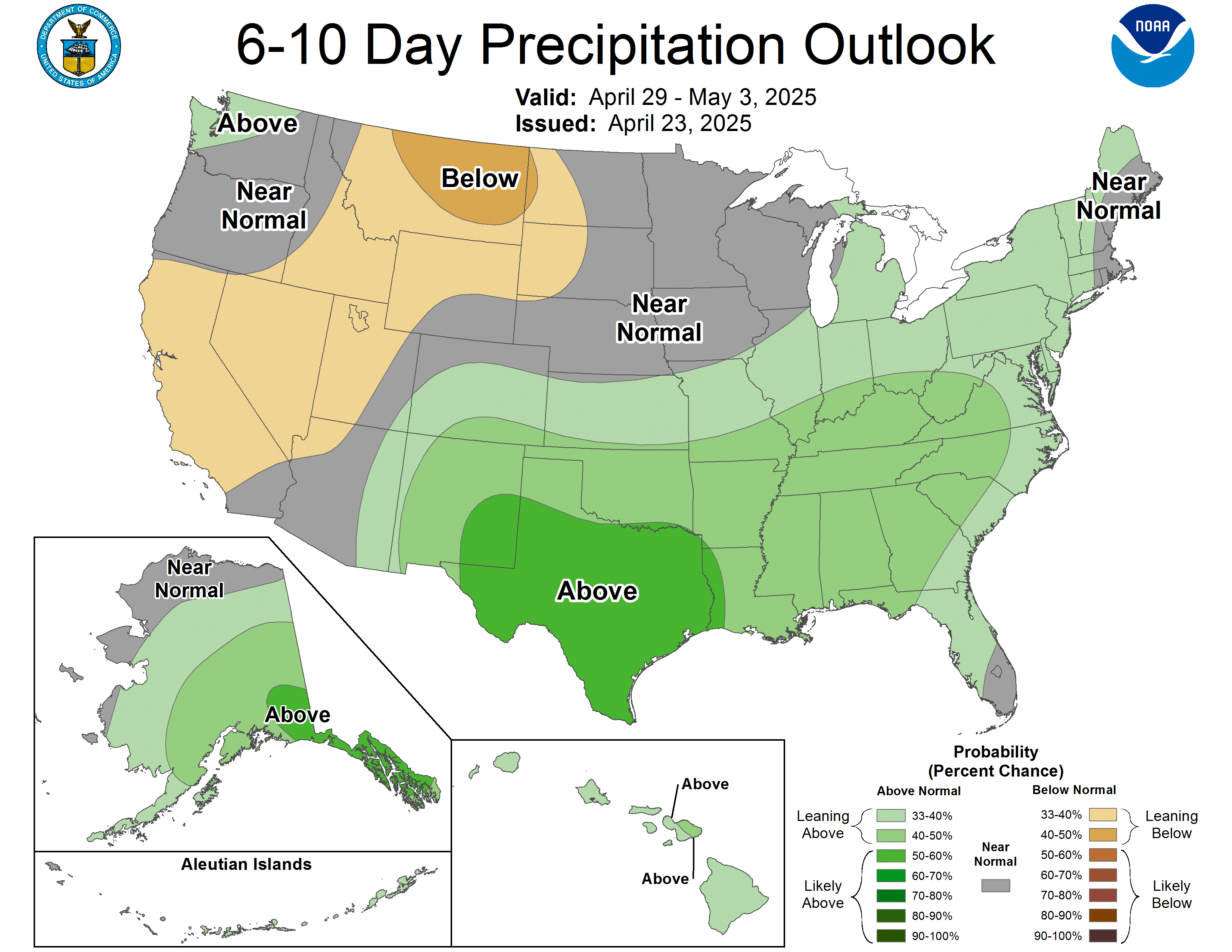
WEATHER: Sunny and slightly cooler today with highs near 93°F. The weekend brings us highs in the low to mid 90s and slightly breezy. Thunderstorm chances return Sunday night at 20% before 1am. Monday looks to be hot again with a high near 99°F before cooling down to 66°F overnight with a 50% chance of showers and thunderstorms. Storm chances continue Tuesday with a 20% chance after 1pm with highs near 82°F. Tuesday and Wednesday night both bring a 60% chance of showers and thunderstorms.
|
|
|
Trivia Answers
-
Seven
- 1877